Are you torn between sunrise beach walks and sunset cruises on the bay? Choosing between bayside and oceanside living in Surf City on Long Beach Island is exciting, but it can feel like you’re weighing two different lifestyles. In this guide, you’ll see how the bay and ocean sides compare for daily living, hosting, recreation, risks, insurance, and long-term value, plus a clear checklist to help you decide. Let’s dive in.
Bayside vs. oceanside at a glance
| Factor | Bayside (Barnegat Bay) | Oceanside (Atlantic) |
|---|---|---|
| Orientation & views | West-facing sunsets; calmer water sounds | East-facing sunrises; open ocean views and surf noise |
| Water & recreation | Great for small boats, kayaks, paddleboards; potential private docks | Direct beach access, ocean swimming, surfing, beachcombing |
| Access & circulation | Often quieter residential feel; check distance to beaches and marinas | Immediate beach lifestyle; seasonal foot traffic and parking demand |
| Noise & crowds | Typically calmer; activity near marinas can vary | More seasonal crowds near popular beach access points |
| Lot features | Some deeper or wider lots; bulkhead and dock potential, permits required | Beach proximity and dune protection are priorities |
| Hosting strengths | Entertaining on bulkheads and docks; guests may arrive by boat | Easy beach days for visitors who want sand-at-your-doorstep |
Daily lifestyle on the bay
Calmer water and sunsets
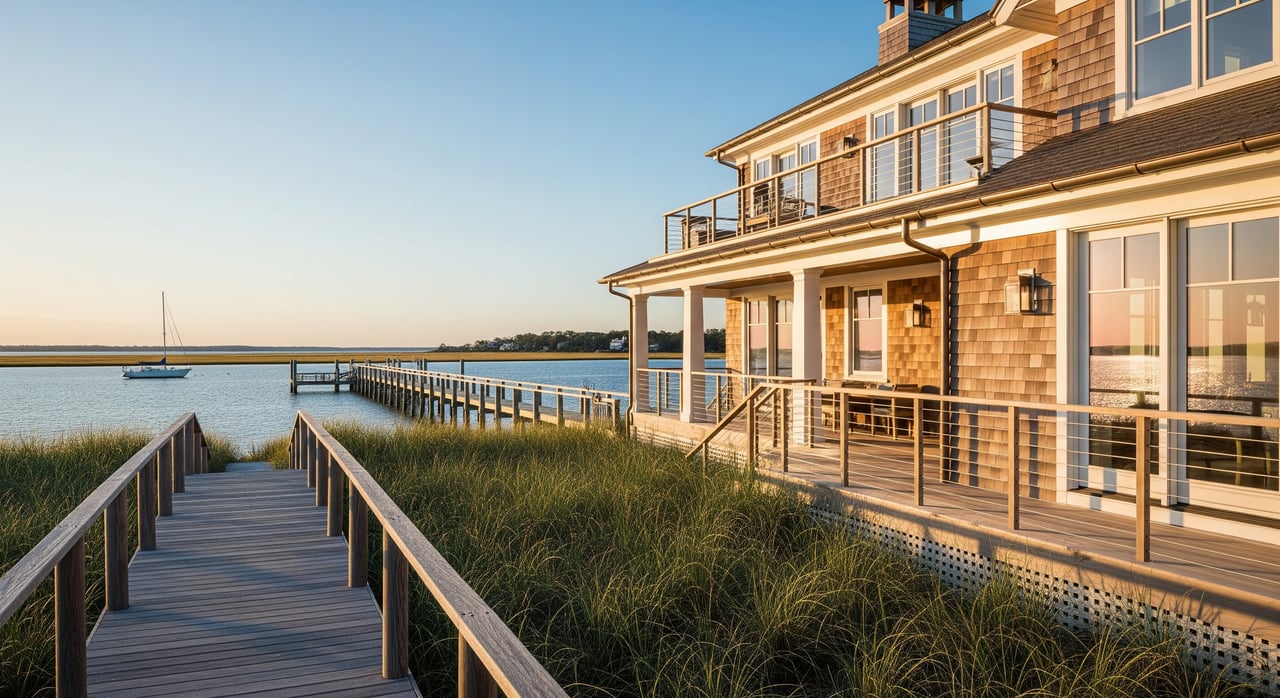
If you picture evenings on the deck watching the sky glow over Barnegat Bay, bayside living fits that vision. You’ll experience calmer water and softer ambient sounds compared with the surf. Views are west-facing, so sunset is a daily event worth planning around.
Boating and dock potential
The bay is ideal for small-boat cruising, fishing in calmer waters, kayaking, and paddleboarding. Many bayside lots can support bulkheads and private docks, subject to site conditions and permits. If hosting boat-friendly guests matters, dock space can expand how you entertain and how people arrive.
Swimming and kids
Bay waters are typically shallower and calmer than the ocean, which can appeal to younger swimmers. Depth and water quality vary by tide and season, so you should always supervise and check local advisories. For many families, the bay offers an easy on-ramp to water life, with the ocean still a short walk or bike ride away.
Daily lifestyle on the ocean
Beach access and surf
If your day starts with a board under your arm or a beach chair in hand, oceanside living makes it effortless. You’ll be steps from ocean swimming, surfing, and beachcombing. Expect stronger winds and the constant sound of the surf, which many owners find energizing.
Lifeguards and routines
Lifeguarded swim areas operate seasonally and are a major draw for oceanside routines. That convenience can be a plus for hosting day guests who prioritize immediate beach access. In peak season, be ready for more foot traffic and the need to plan around parking and beach crowds.
Noise, traffic, and seasonality
Surf City is a classic barrier island town with a single main north–south corridor and seasonal traffic that ebbs and flows. Near popular beach entrances, summer foot traffic rises, which can affect privacy and parking. Bayside pockets often feel more residential, though proximity to marinas or seasonal events can add activity. The best way to judge is to visit at different times of day and in different seasons.
Flood risk and resilience
Both sides of the island face coastal hazards. Flood risk is property specific and shaped by FEMA flood zones, base flood elevation, and the home’s elevation and foundation type. Ocean-facing areas may see more wave action and erosion, while the bay side can experience shallow-water flooding and back-bay surge during storms. Elevated construction and freeboard above the base flood elevation can lower risk and may improve insurance options.
Insurance and ongoing costs
Homeowners insurance in coastal New Jersey often includes specialized wind or hurricane coverage, and separate flood insurance is common for high-risk zones. Premiums depend on factors like flood zone designation, elevation certificates, and mitigation features. On the bay, you should budget for bulkhead, dock, or lift maintenance over time. On the ocean, plan for dune stewardship, exterior wear from salt spray, sand intrusion, and wind-related upkeep.
Permits and regulations to know
Any shoreline improvements such as docks, lifts, bulkheads, or dredging require permits from local and state agencies. The New Jersey Department of Environmental Protection regulates coastal work, and Surf City enforces zoning, setbacks, and elevation standards. Environmental protections, including dune and marsh conservation, may limit certain projects. Utilities and services can vary by location, so it’s smart to confirm sewer versus septic, waste pickup schedules, and emergency service access.
Resale and rental signals
True bayfront and oceanfront lots are scarce, and scarcity supports long-term value. Buyer demand often splits between boating-focused buyers on the bay and beach-first buyers on the ocean. Oceanfront and short-walk-to-beach homes can see strong seasonal rental interest, subject to local rules. Homes with updated elevation, flood mitigation, and durable coastal construction tend to be more marketable on both sides.
Decision checklist for Surf City buyers
Use this checklist as you compare specific properties:
Orientation and views
- Do you prefer sunrise over the ocean or sunset over the bay?
- How important are privacy and separation from foot traffic?
Family routines and recreation
- Do you primarily boat, fish, kayak, or surf and ocean swim?
- Is a private dock a must-have or is immediate beach access the priority?
Children and safety
- Would calmer bay water serve your swimmers better, or do you prefer lifeguarded ocean beaches in season?
- How far is the nearest lifeguarded beach, and how accessible are emergency services?
Hosting and guest logistics
- Will guests arrive by car or boat, and is there dock capacity or adequate parking?
- Is there outdoor space that works for entertaining in variable coastal weather?
Commute, errands, and year-round living
- How close are groceries, health care, and routes off the island?
- How will summer traffic patterns affect your plans?
Flood and storm resilience
- What is the FEMA flood zone, base flood elevation, and available Elevation Certificate?
- What flood history, mitigation upgrades, and repairs does the home have?
Insurance and long-term costs
- Have you obtained quotes for homeowners, wind/hurricane, and flood insurance?
- What are projected maintenance costs for docks, bulkheads, dunes, and exterior finishes?
Permits and property limitations
- Are existing docks or bulkheads permitted, and are records available?
- What do local zoning and NJDEP rules allow for future improvements?
Neighborhood character and seasonality
- Visit in peak and off-season to gauge noise, traffic, and parking.
- Ask about marina traffic, events, and short-term rental activity nearby.
Water quality and ecology
- Check for any local advisories that could affect swimming or shellfish harvesting.
Resale and exit strategy
- Review recent comparable sales on both sides of Surf City.
- Consider year-round usability and rental potential if relevant.
How Coastal Living helps you compare
You deserve guidance that goes beyond a quick pros-and-cons list. As a boutique, LBI-focused team, we help you weigh lifestyle and property fundamentals with clear data and on-island context. Our concierge approach includes valuation and consultation, buyer representation, staging coordination, and studio-grade photography and video so you see a home’s potential. If you are exploring investment or occasional rental income, our integrated short-term rental management through lbi.vacations helps you evaluate occupancy and rate potential alongside your lifestyle goals.
Ready to walk bay docks at sunset and hit the beach at sunrise to see which side speaks to you? Reach out to the Coastal Living Real Estate Group for a private, side-by-side tour of Surf City’s bayside and oceanside opportunities and a complimentary coastal market evaluation tailored to your goals.
FAQs
Which side holds value better in Surf City, bayside or oceanside?
- There’s no universal winner; scarcity supports both, and demand shifts with buyer preferences, property condition, and flood mitigation.
How do flood insurance costs compare for Surf City bay vs. ocean homes?
- Premiums are site specific and depend on flood zone, elevation, and mitigation; obtain quotes for homeowners, wind/hurricane, and flood before you commit.
Is bayside swimming safer for kids in Surf City than the ocean?
- Bay waters are typically calmer, but depth, tides, and water quality vary, so supervision is always required and advisories should be checked.
Can I add a dock to a Surf City bayside property?
- Dock work usually requires permits from the municipality and state; confirm feasibility, permits, and any environmental constraints before planning.
What should I verify before buying on either side of Surf City?
- Review FEMA flood mapping, an Elevation Certificate, insurance quotes, maintenance records, permits for any shoreline structures, and visit at different tides and seasons.